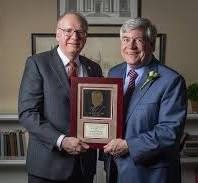
Preserving Professional History and Meaningful Contributions
Professional Biography in Evansville, IN
Start documenting a meaningful professional legacy. Get a Free Estimate
A professional biography brings together the experiences, responsibilities, achievements, and personal commitments that define a career. In Evansville, Indiana, where healthcare, education, military service, and community involvement form important parts of local history, preserving these stories can help future generations understand the people behind meaningful accomplishments.
Dr. Mark Browning provides a central starting point for requests involving professional biography development. Areas of interest include United States Navy Medical Corps service, hematology and oncology careers, medical education, academic leadership, scientific research, professional recognition, philanthropy, and historical preservation.
Whether you are organizing professional records, preparing a family history, developing an institutional biography, or documenting contributions to medicine, the process begins with understanding what information matters most. A carefully prepared biography should communicate facts clearly while respecting the individual, the historical record, and the intended audience.
We help connect your request with an independent professional who can discuss the appropriate approach to documenting and presenting that history.
Professional histories deserve more than a collection of dates and job titles. They deserve context, careful organization, and language that helps readers understand the significance of each contribution. We believe that documenting a career should begin with respect for the facts and an appreciation for the experiences behind them.
We receive biography requests and pass them to an independent local contractor. The contractor contacts the customer, provides an estimate, and performs the work. Our role is to help establish that initial connection.
Our focus reflects the importance of preserving professional and community history throughout the United States. From military medical assignments to academic responsibilities and charitable involvement, each part of a professional life can contribute to a broader understanding of service, leadership, and responsibility.
We encourage an approach that distinguishes documented achievements from personal recollections and avoids presenting assumptions as established facts.
More about us
Professional biographies can cover many different aspects of a person's career. Explore the following areas of biographical documentation to identify the experiences, records, and contributions you would like to preserve.
Preserve documented naval medical assignments, professional responsibilities, and contributions to military healthcare.
Learn more →Document professional experiences in blood disorders, cancer care, clinical medicine, and related medical responsibilities.
Learn more →Preserve documented teaching responsibilities, academic appointments, mentorship, and educational leadership experiences.
Learn more →Organize documented scientific research, scholarly publications, and professional contributions into an accessible biographical account.
Learn more →Preserve verified professional recognition, institutional honors, and documented acknowledgments of career contributions.
Learn more →Document charitable involvement, civic contributions, and participation in preserving community and institutional history.
Learn more →Our primary service area is Evansville, Indiana, with additional biography requests welcomed from Newburgh and surrounding communities in southwestern Indiana. The region's medical institutions, educational organizations, historic river communities, and civic associations provide meaningful settings for professional and personal histories.
Evansville's relationship with regional healthcare makes it a particularly relevant location for documenting medical careers. Nearby Newburgh offers a different historical setting, where family records, community involvement, and preservation of local heritage may form important parts of a professional narrative.
Biography projects do not necessarily require every document to be available locally. Professional records, military documents, academic publications, photographs, correspondence, and other materials may come from institutions throughout the country.
Contact us to describe the history you would like to document and the materials you already have available.
See all service areas
A biography should accurately reflect the responsibilities and experiences that shaped a career without exaggerating accomplishments.
We provide a straightforward way to describe your project before discussing its requirements with the contractor.
Requests may address clinical medicine, military service, education, research, professional recognition, or community contributions.
The history of southwestern Indiana provides useful context for biographies involving local healthcare, education, and civic participation.
Developing a professional biography begins with identifying its purpose. A biography intended for a medical institution may emphasize clinical responsibilities and academic appointments, while a family history may give greater attention to personal experiences, relationships, and community involvement. Understanding the intended audience helps establish the appropriate length, tone, and level of detail.
The next step involves gathering available records. These may include a curriculum vitae, employment documents, military service records, photographs, published articles, correspondence, professional announcements, and institutional histories. Even when materials are incomplete, organizing what is available can reveal useful connections between different periods of a career.
The contractor can discuss which sources are appropriate for the project and whether additional research may be necessary. Interviews with the subject or people familiar with the subject's professional life may provide context that formal records cannot capture. Personal recollections should be identified appropriately, particularly when they cannot be independently confirmed.
Once the material has been organized, the biography can be structured around a chronological timeline or a series of themes. A medical professional's history, for example, might move from education and military service into clinical practice, research, teaching, and later community involvement. Other biographies may work better when organized around particular contributions rather than dates.
Review is an important part of the process. Names, titles, institutional affiliations, publication details, and descriptions of professional responsibilities should be checked before the biography is considered complete. The subject or an authorized reviewer may also identify sensitive information that should remain private.
A finished biography should be understandable to its intended readers without sacrificing accuracy. The goal is to create an organized account that explains what happened, why it mattered, and how different experiences contributed to the individual's professional development. Before requesting assistance, consider whether you need a short institutional profile, a detailed career history, or a document intended for long-term family preservation.
Many professional histories remain scattered across documents, photographs, certificates, correspondence, and personal memories. Over time, these materials can become difficult to interpret, especially for family members or colleagues who were not present during important career events. Preparing a biography can bring that information together while its meaning is still understood.
Retirement is a common reason to begin documenting a career. It provides an opportunity to consider the different responsibilities, professional relationships, and institutional changes that shaped an individual's working life. A biography prepared during this period may benefit from direct recollections and access to records that have accumulated over many years.
Professional anniversaries, institutional celebrations, and historical projects can also create a need for biographical writing. Medical organizations may wish to document the contributions of physicians, researchers, educators, or administrators. Families may want to preserve the history of relatives whose military service or community involvement deserves a permanent record.
Another reason to prepare a biography is the gradual loss of historical context. A photograph may show an important event without identifying its participants. A publication may document research without explaining the circumstances that led to the investigation. An appointment letter may establish a position without describing its responsibilities. Connecting these materials through a narrative makes them more useful to future readers.
Professional biography development can also be appropriate when an existing profile no longer reflects the full scope of a career. A short introduction written for a conference or institutional directory may omit significant experiences that deserve more detailed treatment.
There is no requirement to wait for a particular milestone. Starting with a modest collection of records can help establish a foundation that may be expanded later. The most useful time to begin is often when documents remain accessible and the people who understand their significance are available to explain them.
Professional biography projects vary considerably in complexity. Some involve organizing an existing curriculum vitae and preparing a concise narrative. Others require extensive research, multiple interviews, examination of historical records, and the careful integration of several professional disciplines. These differences affect the amount of work the contractor may need to perform.
The condition of the source material is an important consideration. Clearly labeled documents and organized timelines can make information easier to review. Unsorted photographs, handwritten notes, incomplete records, and conflicting accounts may require additional investigation before they can be incorporated into a biography.
The number of institutions involved can also influence the project. A medical career may include educational institutions, military assignments, hospitals, research organizations, and professional associations. Establishing the relationship between these experiences may require examining records from several different sources.
Technical subject matter presents another consideration. Describing hematology, oncology, medical research, or academic leadership accurately requires attention to terminology. A biography intended for general readers may need explanations that make specialized responsibilities understandable without changing their meaning.
The desired format affects the scope as well. A brief professional profile, an extended historical narrative, and a document prepared for archival preservation serve different purposes. Each may involve different expectations for citations, photographs, supporting materials, and editorial review.
Before work begins, the contractor can discuss the requested deliverables, available records, research requirements, revision arrangements, and anticipated schedule. Clarifying these details helps both parties understand what the project includes.
You can prepare for that conversation by identifying your intended audience, gathering existing materials, and deciding which aspects of the career are most important. It is also useful to identify any publication deadline or institutional requirements. A well-defined request allows the contractor to assess the work more accurately and explain the proposed approach without relying on assumptions about the project.
Evansville occupies an important place in the history of southwestern Indiana. Its position along the Ohio River, development as a regional commercial center, and role in healthcare and education provide useful context for professional biographies connected to the area.
Medical careers in Evansville may intersect with hospitals, specialty practices, educational programs, community organizations, and regional healthcare initiatives. Institutions such as Deaconess and the University of Evansville are recognizable parts of the area's broader medical and educational landscape. References to any institution in an individual biography should be supported by records establishing the actual relationship.
The city's historic neighborhoods also illustrate how professional and community histories can overlap. Areas such as Riverside Historic District and the Haynie's Corner Arts District reflect different periods of Evansville's development. Family residences, community gatherings, charitable activities, and preservation efforts may provide context when they are relevant to the individual being documented.
Regional history extends beyond city boundaries. Newburgh's historic riverfront and Warrick County communities contribute to the wider story of southwestern Indiana. Professionals who lived or worked across these communities may have connections that cannot be fully explained through employment records alone.
Local historical organizations, libraries, institutional archives, and newspaper collections may provide useful background material. Their records can help establish the setting in which professional events occurred, although access and availability vary.
A biography should avoid treating general local history as proof of an individual's involvement. Instead, the contractor can use verified personal records alongside appropriate historical context to explain how a career developed within its surroundings.
For Evansville residents, this approach can be especially meaningful when documenting medical service, civic responsibility, education, or charitable participation. Preserving those connections helps future readers understand both the individual's professional experiences and the community in which some of those experiences took place.
Choosing someone to prepare a professional biography involves more than evaluating writing style. The contractor should understand the purpose of the project, communicate clearly about its requirements, and demonstrate an appropriate approach to handling historical information.
Begin by explaining the intended audience. A biography for a medical publication may require a different level of technical detail from a family keepsake or community history. Discussing this distinction early can prevent unnecessary revisions and help establish a suitable structure.
Ask how the contractor approaches source verification. Professional titles, military assignments, academic appointments, research publications, and awards should not be presented as facts without appropriate supporting information. The contractor should be able to explain how conflicting records or uncertain recollections will be handled.
It is also helpful to discuss experience with specialized subject matter. A biography involving clinical medicine may contain terminology that needs careful interpretation. Military medical service may require an understanding of ranks, assignments, and organizational structures. Historical preservation may involve records that were created under different documentation practices.
Privacy deserves particular attention. Personal letters, unpublished research materials, military records, and family documents may contain information that is unsuitable for public distribution. Ask how materials will be transferred, reviewed, stored, and returned, and establish who may authorize their inclusion in the final biography.
The proposed deliverables should be clearly described. Determine whether the project includes research, interviews, writing, editorial review, source references, or assistance organizing supporting records. Confirm how revisions will be managed and what format will be provided upon completion.
Finally, consider whether the contractor communicates in a way that makes the process understandable. A successful biography project depends on cooperation between the person requesting the work and the person preparing the narrative. Clear expectations, careful review, and respect for documented facts are more valuable than promises of impressive results that cannot be supported.
A professional biography becomes more valuable when the records behind it are preserved in an organized manner. Documents that appear ordinary during a person's career may later help explain important decisions, relationships, and accomplishments. Maintaining those materials alongside the narrative can support future historical research.
Start by identifying original documents and separating them from copies. Employment correspondence, military paperwork, academic records, publication materials, photographs, and professional announcements may each provide different kinds of evidence. Preserve identifying information whenever possible, including the source of a document and the circumstances in which it was created.
Photographs deserve special attention because their meaning can disappear when names and locations are forgotten. Identifying participants, approximate dates, institutions, and events can make an image considerably more useful. Where information is uncertain, it is better to acknowledge that uncertainty than assign an unsupported identification.
Digital preservation can improve accessibility, particularly when relatives or institutions are located in different parts of the United States. Organized digital copies may make records easier to review without repeatedly handling fragile originals. However, digital files also require suitable storage, backup arrangements, and attention to privacy.
Not every preserved document needs to appear in the biography itself. Some records are useful primarily because they support a particular statement or establish a sequence of events. Others may contain personal information that should remain restricted even when the broader professional history is shared publicly.
The contractor can discuss whether the requested biography should include a source list, document references, or an accompanying inventory of historical materials. These additions may be particularly useful when the finished work is intended for an archive, institutional collection, or family history project.
Preserving a professional legacy is ultimately about maintaining understandable connections between people, events, and records. A readable biography provides the narrative, while carefully maintained source materials allow future readers to explore the history in greater depth.
Dr. Mark Browning does not do the professional biography work itself. When you call or send the form, we pass your request to an independent local contractor who covers your part of United States. That contractor contacts you, gives you the estimate and does the work.
See what happens after you callYes. We accept requests involving professional histories in Evansville and nearby communities. The contractor can discuss the type of biography you need and the materials available.
A single biography can document several connected areas of professional experience. Military assignments, medical practice, education, and later contributions can be organized into one coherent narrative.
A complete curriculum vitae is helpful but not essential. Other records and authorized interviews may provide a foundation for developing the biography.
Local historical research may be appropriate when it helps explain the setting of a professional career. The contractor can determine whether relevant records are accessible and useful.
The independent contractor receives the request and contacts you directly. That conversation establishes the proposed work, deliverables, and estimate.
Bring together the records, experiences, and contributions that define a professional life. Begin your biography request today.
Free — no obligations